


by Miceál O’Hurley

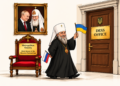
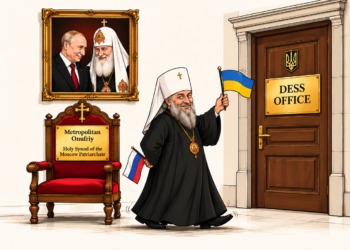
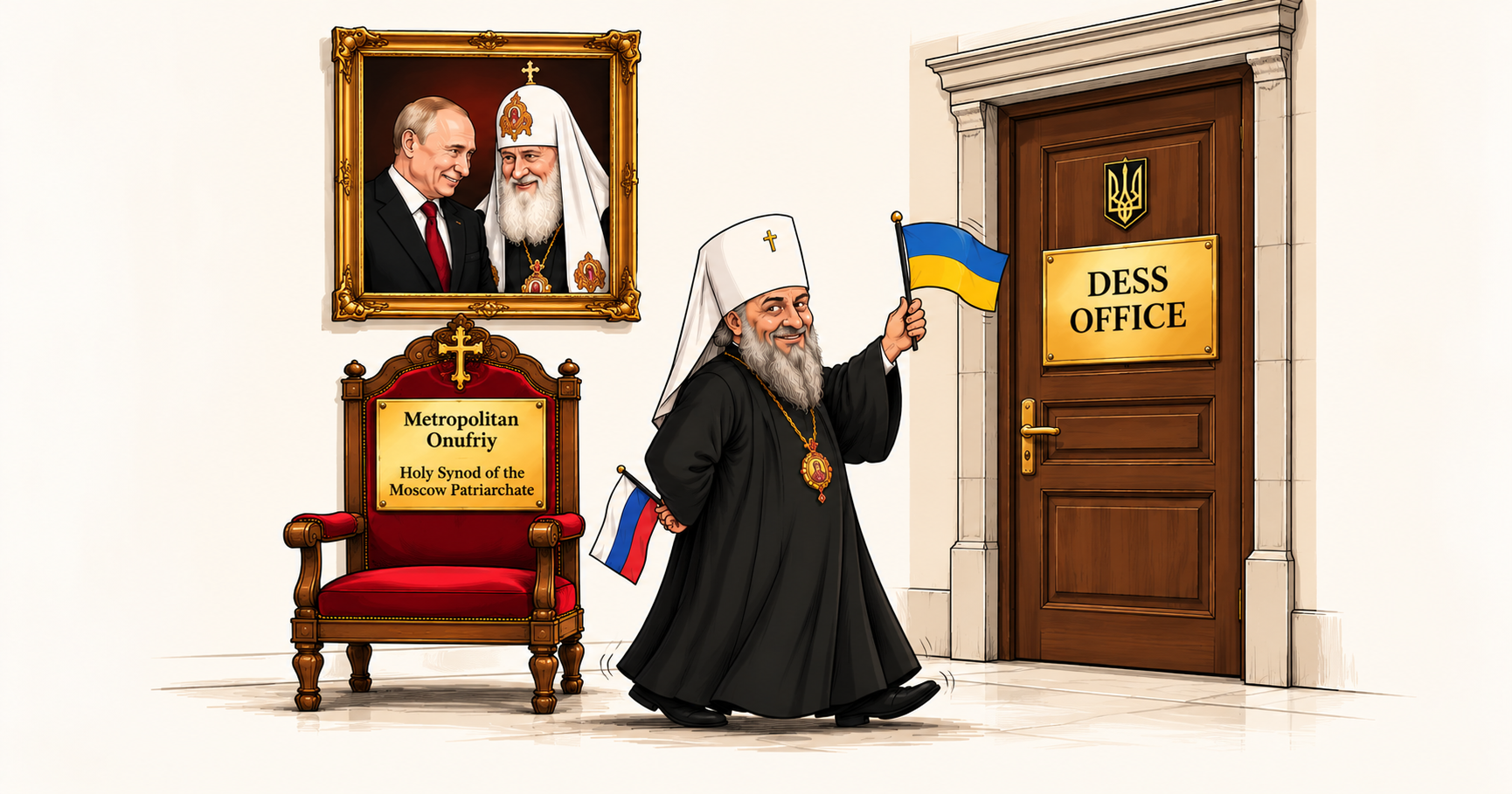
KYIV ― In the continuing saga regarding the Russian Orthodox Church using its position as an extension of Russian government policy, the Kyiv Metropolis of the Ukrainian Orthodox Church (UOC-MP) has refused once again to comply with an Order issued by Ukraine’s State Service for Ethnopolitics and Freedom of Conscience (DESS). The Order required the UOC-MP to sever its ties with the Russian Orthodox Church (ROC) and Moscow Patriarchate (MP). Metropolitan Onufriy, leader of the UOC-MP, rejects claims his local Church is affiliated with the Moscow Patriarchate. Notwithstanding, he has refused to comply with the Order providing such undertakings including formally rejecting his seat on the Holy Synod of the Russian Orthodox Church.
In 2024, Ukraine adopted Law No. 3894-IX known as the ‘Ban on Russia-Linked Religious Organizations’. The law requires that ties with Russian entities be terminated for security reasons before permission to operate in Ukraine can be granted or maintained. According to DESS agency head, Yelensky, as a result of Law No. 3894-IX, a detailed and expansive investigation was undertaken to determine UOC-MP compliance. The investigation established beyond a reasonable doubt that the UOC-MP and its leadership continue to maintain significant links to the Moscow Patriarchate.
Yelensky characterised the Primate of the Church, Metropolitan Onufriy, as having described the Order as an “ultimatum” requiring the Church “to betray Christ”. The Metropolitan’s reasoning seems lacking in foundation as this is an issue of administration of an organisation subject to Ukrainian law lacking any attempt to parse spiritual or religious matters covered by Constitutional protections.
In response to the investigation, the DESS sought four conditions before allowing the UOC-MP to continue to operate in Ukraine, including: The UOC-MP and its institutions belonging to the Russian Orthodox Church must formally withdraw from it; Metropolitan Onufriy must withdraw from the Holy Synod of the Russian Orthodox Church; The Kyiv Metropolis (UOC-MP) must declare the Russian Orthodox Church’s Statute inapplicable to itself; and, the UOC-MP must refuse to recognise the Russian Orthodox Church’s annexation of Ukrainian dioceses in occupied territories.
Metropolitan Onufriy and the UOC-MP have rejected these conditions, seeking instead to maintain their relationship with the Russian Orthodox Church.
The UOC-MP publicly maintains that it broke ties with Moscow. Notwithstanding, Ukrainian investigators concluded it remains structurally and legally affiliated with the ROC and MP. Given the clarity of the four conditions required for the UOC-MP to easily demonstrate its bona fides of having divested itself of ROC-MP influence, control and governance, analysts remain skeptical that Metropolitan Onufriy and the UOC-MP have genuinely broken with Moscow.
According to a May 2024 survey by the Kyiv International Institute of Sociology, 82% of Ukrainians don’t trust the UOC-MP. Only between 5%-8% of Ukrainians expressed trust in the UOC-MP and its leadership. The survey included a cross-national representation of participants. Some 76% of Ukrainians in Eastern Ukraine to 85% in Western Ukraine, with a reported 86% of Ukrainians surveyed in Central Ukraine expressed favour for a proactive Ukrainian state position regarding restricting the activities of the UOC-MP.
Any failure to comply with the DESS Order could lead to proceedings being issued seeking the termination of the UOC-MP’s activities as a legal entity. Ukraine has argued it has a legitimate security interest arising from organisations and individuals that maintain significant ties to Russia at this time of war. Ukraine, Latvia and Estonia have each established laws restricting Russian ecclessiastical control of local Churches. Lithuania and Moldova are applying pressure on local Churches to break ties with Russia and are considering legislative initiatives to safeguard their national security interests.
A European Parliament resolution adopted on January 23, 2025 expressly condemned Moscow's exploitation of Orthodox religion for geopolitical purposes.  It described the Russian Orthodox Church as an instrument used to influence and exert control over Orthodox populations in Ukraine, Georgia, Moldova, Serbia and elsewhere.  The Resolution was adopted by 480 votes in favour, 58 against and 48 abstentions.

Separately, PACE adopted Resolution 2567 in April 2024, which explicitly called for recognition of the Russian Orthodox Church as an instrument of Russian influence and propaganda.  The Resolution recommended that member states, Recognise the role of the Russian Orthodox Church as a tool of Russian state propaganda; Evaluate the involvement of religious institutions being used to spread Kremlin propaganda; and, Address the involvement of such institutions in their own countries.
The UOC-MP, along with all confessions of faith, enjoy significant Constitutional safeguards in Ukrainian law. Article 35 of the Ukrainian Constitution guarantees the right to freely profess any religion or no religion, perform religious rites collectively or individually, and ensure no single religion is recognised as mandatory by the State.
Metropolitan Onufriy and the UOC-MP claim Ukraine is engaged in religious persecution.
The Ukrainian Council of Church and Religious Organisations (UCCRO) rejects the assertion Ukraine is engaged in religious persecution agains the UOC-MP. The quarter of a century old UCCRO includes 15-churches and religious organisations and 1-interchurch organisation: including Orthodox, Greek and Roman Catholic, Protestant and Evangelical churches as well as Jewish and Muslim religious unions. The UCCRO represents more than 90% of all religious organisations in Ukraine. The UOC-MP ceased to meaningfully participate in the UCCRO since 2023. In 2026, UCCRO suspended the UOC-MP’s membership.
According to reporting by the Ukrainian media centre Espreso, Yelensky detailed what exactly is required of the UOC-MP to maintain its registration and authority to operate in Ukraine:

 1.  All institutions belonging to the Russian Orthodox Church must formally withdraw from it.

The first compliance mandate is that all parishes, dioceses, monasteries, educational institutions, brotherhoods, sisterhoods and missions that form part of the UOC-MP must adopt decisions formally withdrawing from any and all Russian Orthodox Church structures.

2.  Metropolitan Onufriy, who leads the UOC-MP from the Metropolitanate of Kyiv, must withdraw from the Holy Synod of the Russian Orthodox Church.

The second requirement concerns the Primate of the UOC-MP, Archbishop Onufriy (Berezovsky). According to Yelensky, he must publicly declare his disagreement with his appointment to the Holy Synod of the Russian Orthodox Church and consequently formally withdraw from that body.

3.  The Kyiv Metropolis must declare the Russian Orthodox Church's Statute inapplicable to itself.

The third mandate requires the Kyiv Metropolis of the UOC-MP to declare that the Statute of the Russian Orthodox Church is not valid or applicable in relation to itself. According to DESS, this Statute provides for the subordination of the UOC-MP to the Moscow Patriarchate. Yelensky points out that the relevant section of the Statute was adopted at the Bishops' Council of the Russian Orthodox Church in 2017, with the participation of UOC-MP bishops.

4.  The UOC-MP must refuse to recognise the Russian Orthodox Church's annexation of Ukrainian dioceses in occupied territories.

The fourth requirement is that the UOC-MP must not recognise the annexation by the Russian Orthodox Church of Ukrainian dioceses located in Russian occupied territories. Yelensky emphasises that the Order concerns the termination of institutional ties with the Moscow Patriarchate. According to him, the State is not demanding that the UOC-MP transfer its allegiance to the Orthodox Church of Ukraine (OCU) which received its Tomos of autocephaly from the Ecumenical Patriarchate, or change the language used in its liturgical services, or abandon its religious rites.  The State maintains that it does not seek to interfere in the traditions or religious aspects of the UOC-MP but only safeguard Ukraine against undue Russian influence at a time of war.
Given the rejection of compliance by the UOC-MP, legal proceedings are expected to issue shortly.
Yelensky claims that the UOC-MP objections to the Order as submitted do not provide specific explanations as to why Metropolitan Onufriy could not withdraw from the Holy Synod of the Russian Orthodox Church. No reasoning was given as to why the UOC-MP and the Kyiv Metropolis could not declare the Moscow Patriarchate’s Statute inapplicable to itself. In the assessment of the head of DESS, the objections contain broad and vague general arguments that do not directly address the requirements imposed. Yelensky also states that the UOC-MP leadership has not sufficiently explained the substance of the order to its clergy and faithful allowing propaganda to influence their parishioners’ opinions at the expense of facts and truth.
The critical legal distinction is between Ukraine exercising legitimate regulation matters related to national security at a time of war and the UOC-MP claims of religious persecution arising from matters of faith. In international law, Ukraine enjoys the right to reasonably restrict any organisation that may be demonstrably acting as an instrument of a hostile foreign power. I may also enjoy the prerogative to prohibit a religious organisation because of its ecclesiastical affiliation with the enemy at a time of war though doing so without establishing that it presents a genuine threat to national security will be weighed in the balance of European and international human rights laws.
The dispute over the lawfulness of the Order is already before the courts. According to Yelensky, lawyers representing the UOC-MP are challenging the Order and other decisions issued by DESS for various reasons. Yelensky maintains that the objections are overly broad and general in nature and multiple motions and administrative procedures have been launched for the purpose of delaying substantive consideration of the case without addressing its merits in substance or law. Cynics claim the UOC-MP are hoping delays will buy time for a “Russian Spring” which would be inagurated with a Russian victory or Kyiv’s capitulation to Moscow’s demand that the UOC-MP be enshrined as the only canonical church in Ukraine seeing the OCU Ecumenical Patriarchate church suppressed and proscribed.
Further delays have been achieved by flooding the Court with vexatious petitions many of which are frivolous in nature. Numerous individuals describing themselves as UOC-MP “believers” have sought to join the proceedings as “third party defendants”. By flooding the court with participation challenges the merits of the case remain unexamined. Meanwhile, the UOC-MP argues it has been subjected to religious discrimination and criminality by the State all while evidence they are thwarting and coordinating attempts to have the substance of the case remain unexamined by the Court continue. While Yelensky acknowledges the right of individuals to meaningfully participate in proceedings in which they may have standing, he has described the delaying tactics as being abusive of the judicial process and administration of justice.
The peril for the UOC-MP, which is seen to support if not coordinate the attempts of numerous individuals to join the proceedings in a manner designed to slow proceedings, is that in the absence of compliance, the DESS has no alternative but to apply to the Court for and Order to terminate their operations. Skeptics of the UOC-MP opine being struck-off the list is the actual goal of the UOC-MP without having the merits of the action tested or examined in detail.
Metropolitan Onufriy and the UOC-MP may have weighed the propaganda value to the UOC-MP and Russian Orthodox Church from a termination order may exceed the value of having the case weighed on evidence and examined at trial.
Any application by the DESS would requisitely be narrowly limited to the termination of the UOC-MP as a legal entity and other individual entities of the UOC-MP. No order would or could legally be sought that would intrude on the religious rights of individuals’ practice of faith. Articles of faith are not before the Court. It is important to clarify that these proceeding concern an application for the judicial termination of the specific legal entity, the Kyiv Metropolis of the UOC-MP.
The UOC-MP complains these proceedings are an attempt to force their believers to join the canonical OCU. This is blatantly false. There is no action or related contemplation of actions that would or could automatically prohibit the personal religious beliefs of its faithful or force them to join another local Church. The DESS has made no determination in this matter regarding parish or organisational transfers to other entities such as the canonical OCU (Ecumenical Patriarchate). The mandate of the DESS remains focused on encouraging compliance with Ukrainian law on the part of the UOC-MP or in its absence seeking appropriate Orders regarding termination of the entities from the Court.
Within Orthodoxy, Metropolitan Onufriy’s actions have caused concern and enhanced division. Russian ceasefire demands include that Ukraine recognise the UOC-MP as the only canonical Church of Ukraine. This despite Metropolitan Onufriy’s decision he would no longer commemorate Moscow Patriarch Kirill. Canon 15 of the First-Second Council of Constantinople (861) allows a bishop to cease commemorating another bishop or Patriarch as a means of protest. It does not, however, rise to the level of rejecting the OCU-MP’s ties with the Russian Orthodox Church according to Orthodox Canon Law or in Ukrainian law as Metropolitan Onufriy has obliquely claimed.
The OCU-MP’s decision to amend their statute following the Russian full invasion of Ukraine in 2022 also falls far short of these canonical and civil or criminal law standards. By allegedly having declared themselves to be an administrative and autonomous independent Orthodox Church these acts are insufficient to elevate the OCU-MP to having autocephaly. Neither exercising prerogatives under Canon 15 nor invoking administrative and autonomous status severs canonical ties with the Moscow Patriarchate nor achieves autocephalous status for the OCU-MP.
For as long as the Russian Orthodox Church continues to operate on the understanding the OCU-MP is canonically subordinate to them and Metropolitan Onufriy and the Kyiv Metropolitanate reject the terms of the DESS, which includes among other things Metropolitan Onufriy renouncing his seat on the Holy Synod of the Russian Orthodox Church, the bona fides of any claims the OCU-MP has broken its ties to the Moscow Patriarchate lack foundational credibility. The consequence of Metropolitan Onufriy’s refusal to articulate a detailed and credible defense renders the OCU-MP’s position neither plausible or credible. Consequently, it forces the DESS to seek permission from the Court to strike them from the list of registered bodies.
Beyond the refusal of the OCU-MP to comply with the mandates of law to divest themselves of Russian authority and control at a time of war, individual clergy, including high-ranking bishops of the Kyiv Metropolitanate, have undertaken actions that betray the OCU-MP’s pro-Russian alignment. Earlier this month, the Kalush City District Court in Western Ukraine’s Ivano-Frankivsk Oblast sentenced OCU-MP Bishop Kyrylo Mykhailiuk to 3-years’ probation. Bishop Mykhailiuk was found guilty of orchestrating a large-scale scheme involving the sale of fraudulent documents certifying the ordination of 291 men as deacons. Law enforcement established the scheme was designed and implemented by Bishop Mykhailiuk between June 2023-November 2025.
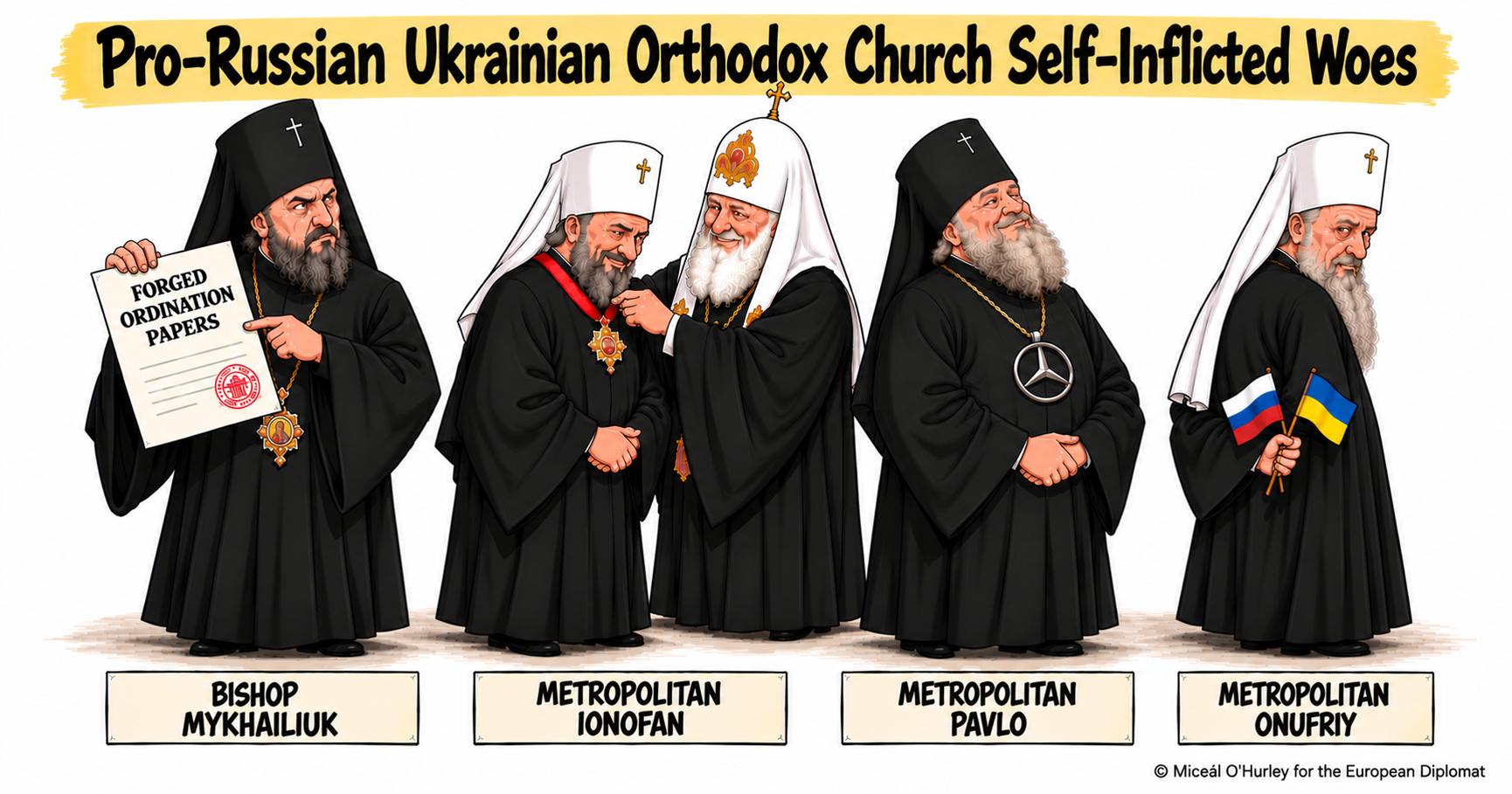
Bishop Mykhailiuk issued fake ordination certificates and deacon credentials to UOC-MP believers otherwise eligible for military service. The objective of his scheme was to help men escape mobilisation to defend Ukraine against Russian invaders and occupiers. At trial, Bishop Mykhailiuk was proven to have fabricated news reports about the fraudulent ordinations by backdating the stories on the eparchy’s website, using the credibility of the OCU-MP to aid his scheme. To further assist the fraudulent deacons to avoid defending Ukraine against Russian aggression, Bishpo Mykhailiuk personally attended military induction centres to ensure the OCU-MP believers could successfully avoid military service and defend Ukraine against the Russian invasion. As a result of his conduct, the Synod of the OCU-MP suspended Mykhailiuk from leadership of the Uzhhorod-Khust Eparchy on November 13, 2025. He is banned from issuing credentials or performing ordinations.
In one case involving UOC-MP hierarchs, Metropolitan Ionafan was sentenced to 5-years in prison for his support for Russia’s invasion of Ukraine in August 2024. He was released from custody to the Moscow Patriarchate as part of a prisoner exchanged deal resulting in the release of Ukrainians held in Russian captivity. Upon being received by Moscow Patriarch Kirill in Russia, Metropolitan Ionofan was personally decorated with the Order of St. Sergius of Radonezh, first class. While an Orthodox bishop receiving honours from another Orthox bishop is nothing unusual, a Ukrainian bishop receiving honours by the Patriarch of the Russian Orthodox Church during an illegal invasion and occupation of Ukraine is both remarkable and repugnant to UOC-MP claims of being a patriotic, local Church.
Another UOC-MP bishop, poularly known as “Pasha-Mercedes” for his fondness for luxury cars, Metropolitan Pavlo, was previously arrested and released on 33m UAH bail accused of justifying or denying the Russian invasion of Ukraine. Legal proceedings against Metropolitan Pavlo are ongoing. The latest available information from the Security Services of Ukraine show some 208 criminal proceedings have been initiated against UOC-MP clergy since 2022. This eoncompasses 78-members of the clergy having been formally notified of suspicion including 27-senior hierarchs of the OCU-MP. To date, 40-members of the OCU-MP clergy have been sentanced to prison. At least four UOC-MP hierarchs and clergy have voluntarily requested to be included in prisoner exchanges so they can reside in Russia.
As for the DESS proceedings seeking the OCU-MP’s compliance with Ukrainian law or to have the Kyiv Metropolitanate struck-off the register, the OCU-MP’s future is in their own hands.
The OCU-MP’s right to remain as a registered body and operate within the law can only be served and concluded by cooperation with the State and the Court. This will require its “believers” by ceasing to delay judicial determination of the matter by continuing to load the docket with third-party litigants whose efforts are tantamount to the abusive process of law the goal of which is to delay judicial scrutiny of the main facts in this matter. As Ukrainian proceedings do not interfere with the exercise of faith but are confined to the administration of justice for the purposes of Ukraine’s security against an enemy invader both the public and individuals can nurture reasonable assurances their religious freedom rights will not be impeded.
Metropolitan Onufriy’s claims Ukraine have delivered an “ultimatum” to “reject Christ” is unworthy, dangerous and only benefits the cause of Ukraine’s invaders and illegal temporary occupiers. If the truth is to prevail over propaganda, Metropolitan Onufriy and the OCU-MP can either meet the reasonable and clear requirements of the DESS Order or cooperate in having the matter properly adjudicated according to the rules of evidence and law without further delay.
_______________________________
This article relies upon significant analysis and reporting by Renata Trifinova and a review of open source information.