



by Miceál O’Hurley
 TEHRAN — Indications point to the increasing likelihood the US-Iran negotiations scheduled for this Thursday will not result in avoiding military confrontation. US President Donald’s Trump’s position on Iran’s nuclear ambitions has resulted in a new US red line that may well prove unacceptable to the Islamic Republic. Requirements that Iran destroy its ballistic missile arsenal is equally a difficult if not unrealistic demand on the Islamic Republic. Trump’s aspiration to be the first US President in 57-years to bring an end to the rule of the Ayatollahs seems to drive his and his political advisor’s goals even if Pentagon leaders are attempting to temper expectations that military strikes can deliver on Trump’s objectives. This triad of demands seems designed to make a negotiated agreement impossible.Iran has long claimed its nuclear ambitions are limited to energy, medicine and science. Supreme Leader Ayatollah Ali Khamenei has preached that the use of nuclear weapons is incompatible with the teachings of Islam. And yet, Iran’s enrichment goals have long proved worrying. Its ballistic missile capabilities pose an offensive threat within the region, primarily for Israel. As for regime change, the Islamic Republic and its theistic leadership have shown no interest in abandoning power. To the contrary, it becomes more entrenched with increased pressure that does not provide sanctions relief.
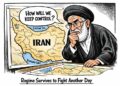
The Supreme Leader’s appointment of Ali Larijani, a former Republican Guard commander and politician, to the newly created Defense Council speaks volumes for the regime being intent on longevity. The Defense Council was recently created from the existing Supreme National Security Council to provide authority for the continuance of government should war necessitate it. The Islamic Republic seems determined to retain its power and ethos even in the event of catastrophic circumstances. Already, the nomination of leadership in depth to replace ‘martyrs’ in leadership positions has been instituted. Defenses have been hardened. Redeployment of assets, arms and systems, both defensive and offensive, continue at pace. Undoubtedly, the Islamic Republic is coordinating possible asymmetrical strike scenarios targeting US personnel, assets and interests through its network of partners. Such reprisals unlikely to be limited to the region.
Toppling the Islamic Republic will not prove as easy as did Trump’s removal of Venezuelan President Nicolás Maduro. It is high dubious if Trump could or would be able to coopt and maintain any surviving Islamic Republic leadership in situ as occurred in Venezuela. Exactly whom Trump believes can and will lead Iran should the Islamic Republic be displaced remains uncertain.
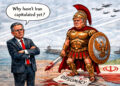
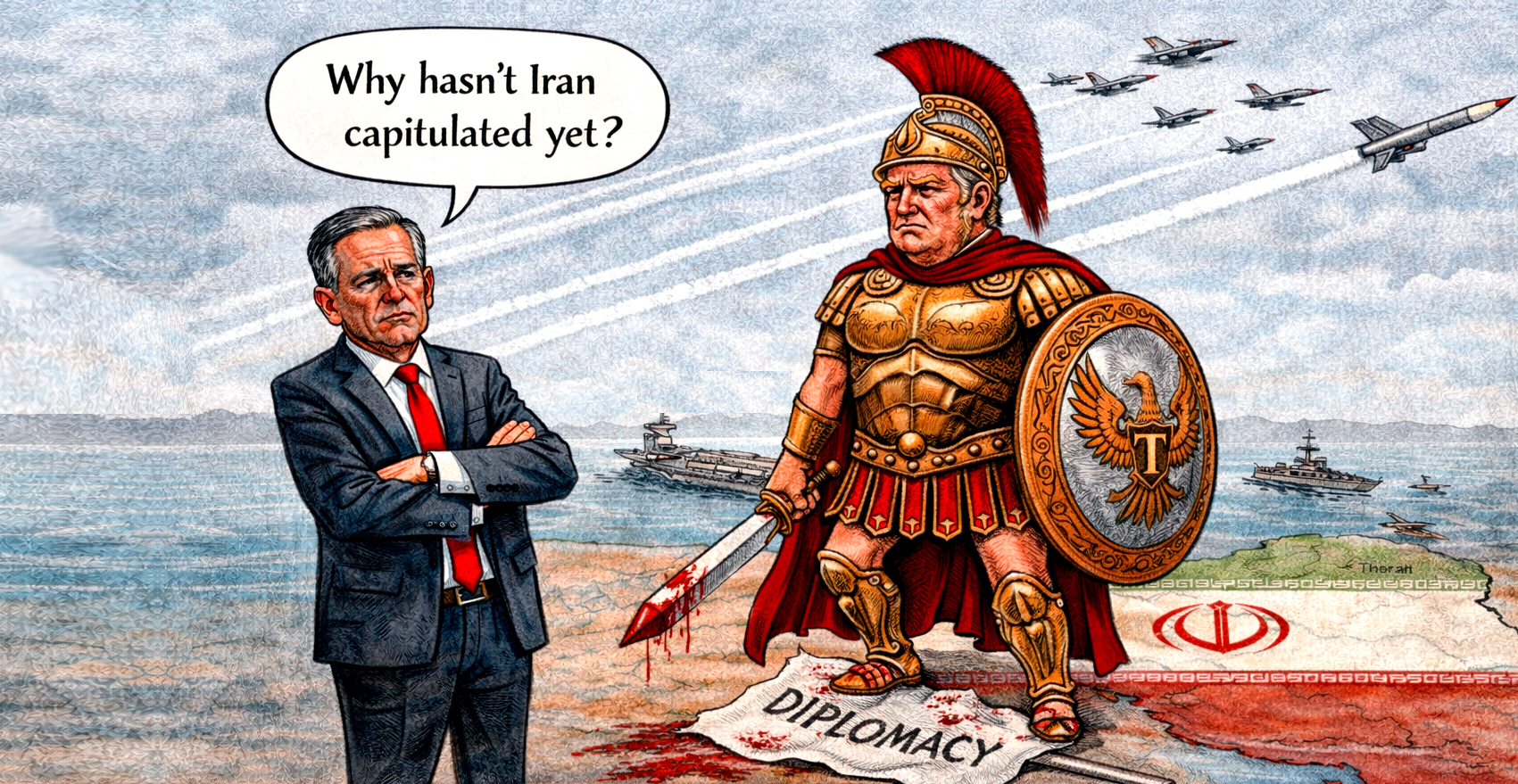
This past weekend, Trump’s chief negotiator, Steve Witkoff gave an interview in which he mused that Trump remains ‘puzzled’ as to why Iran has not ‘capitulated’ to his demands. The seeming indication that Washington made demands upon Iran instead of having entered into dialogue and negotiations seems typical of Trump whose resort to force and ultimatums often guides his foreign policy. However, mixed-messaging from the White House continues to defy clarity regarding Trump taking negotiations seriously. What is on offer by the US is widely being perceived as a demand for Iran’s unconditional surrender. Iran’s historic posture would normally indicate such an approach to be likely to fail.
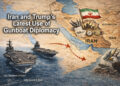
With such a diplomatic approach, force in lieu of diplomacy seems to be Washington’s plan. Two carrier group strike forces are now on station surrounding Iran. These are complimented by other offensive asset in the region. There has been no discernable detection of a regional ground troop swell. This all points toward Trump’s preference for a kinetic solution with the possible use of surgical strike teams operating on the ground to achieve certain, limited goals, possibly including the capture of certain personnel.
Although talks between the Islamic Republic and the US are scheduled to resume Thursday, evidence and posturing by both sides show scant evidence a genuine diplomatic solution is on offer. It is doubtful that Trump, already suffering from his growing domestic problems and crippling foreign policy setback at the hands of the US Supreme Court which undermines his unitary theory of executive power and will now blow-up the deficit at a time when US economic growth is outpaced by inflation, will accept any resolution to the Iran crisis that doesn’t portray his as an outright victor.
Internationally, support for US military strikes on Iran are lacking. Outside of Trump’s perenial and personal ally, Israeli Prime Minister Benjamin Netanyahu, any indication of a coalition of support being built does not seem to exist being a general condemnation of the Islamic Republic. Britain has signaled it intends to deny the US use of its resources and air space to conduct contemplated strikes on Iran. Regional partners have uniformly cautioned Washington in the most emphatic terms that military action against Iran on the scale threatened by Trump is unlikely to achieve clear outcomes. There is a strong consensus that the risks far outweigh any reasonable expectation of success. Myriad unintended consequences are likely in any scenario militating towards the use of force by the US creating a more complex situation in Iran plausibly leading to regional spillover.
The fundamental question remains – if Trump’s 2025 strikes genuinely destroyed Iran’s nuclear capabilities – what is the necessity of striking Iran now? Only two weeks ago, on 13 February, Trump claimed the 2025 strikes on Iran he ordered succeeded in, “… achieving total obliteration of the Iran nuclear potential capability — totally obliterated”. Since then he has failed to produce any evidence Iran has miraculously resurrected its nuclear weapons programme. Trump appears to be set upon striking Iran and is now looking for reasons to do so. To date, it has failed to convince foreign leaders, analysts or defense experts.
Even if Iran’s nuclear programme infrastructure was destroyed in last year’s attacks by the US its ambitions remain, and that is a big ‘if’. It remains incredulous to believe any kinetic strike is likely to destroy the personnel that retain the scientific knowledge to resurrect Iran’s nuclear weapons programme. As Israel has struggled to learn from the Palestinians, destroying territory and infrastructure does kill an idea. Likewise, Iran has undoubtedly concluded that failing to achieve nuclear weapons capacity, or being encouraged like Ukraine to surrender its nuclear arsenal for supposed peace, even when plied with security guarantees, is a recipe for vulnerability and demise. North Korea, once viewed as a serious threat for desiring nuclear weapons capability, is now virtually ignored by Washington after experts agreed it has acquired and developed a credible nuclear weapons programme. The Islamic Republic may feel nuclear weapons attainment is its ticket to survival. The West’s veritable abandonment of Ukraine following its Budapest Memorandum border and sovereignty and security guarantees now creates a conundrum for nuclear deterrence.
In Tehran and across Iran, renewed student protests combined with general unhappiness with the economy, life and anger at the Islamic Republic’s heavy-handed response to January’s protests that costs thousands of lives threatens the regime’s stability anew. Although now contained, how such protests might unilaterally evolve or be exacerbated by a US strike remains is uncertain. Dissatisfaction and opposition to the regime is growing. Iran’s Basij Resistance Force, a plain clothes division of the Republican Guard, is already showing signs of increased vigilance and presence in the streets and on campuses. They have proven themselves effective in the past as quashing protests even if not preventing them.
There remains a clear impediment to opposition figures coalescing to effectively change government or otherwise lead Iran in the event of the Islamic Republic falling. There is no clearly identified leader around with the opposition is willing to marshal their support. Without a universally embraced opposition leader, even severe damage to the Islamic Republic regime in the absence of the US having boots on the ground will undoubtedly lead to chaos and bloodshed. Without an internal opposition leader or credible government in exile waiting to take the reins of government, a US effort to bring down the regime is likely to result in widespread violence, bloodshed and civil dysfunction.
Sober military leaders in the Pentagon remain bullish on US force superiority. They are, however, reported to have cautioned Trump about the use of force at this time to achieve nebulous goals where hard-targets may not exist. Missiles can be effective at taking out hard targets but remain poor tools for effecting regime change. As my old friend, Iranian Ambassador and Academy expert Dr. Massoud Eslami once told me, “To the US government everything looks like a nail because it has nothing in its toolbox but hammers. The extremist and abnormal policy of “maximum pressure” has to stop“. At present, it appears Trump is looking for a nail specifically so he can use his hammer.
At present, US Envoy Witkoff’s “capitulation” language coupled with Supreme Leader Ayatollah Ali Khamenei’s weekend glorification of those willing to be martyrs to the Islamic Republic bode ill for any diplomatic resolution prevailing. It is now a waiting game. With two naval strike forces on station Trump has surpassed their use for messaging to promote of deterrence and entered into the realm of impending threat if not action.
In the absence of Trump making his case for the necessity of such strikes at this time, enumerating clear goals and pursuing paths likely to achieve a desirable outcome, uncertainty remains and any chance for peace retreats. Beyond the threatened strikes, future governance, management and exit strategy, elements usually demanded by Congress before granting War Powers which is their prerogative, points towards yet further military adventurism masquerading as a foreign policy pursuit and achievable outcome attainment.