



by Miceál O’Hurley

CAIRO ― A notable shift in the geographic importance of Egypt’s emergence as the epicentre of international arbitration is transforming the sector and region. Throughout its modern development, international commercial arbitration has been dominated by a small cadre of established centres, particularly London, Paris, Geneva, New York, and Singapore. Their repute was built upon the durable reliability of its judiciaries, sophisticated legal systems, established arbitral institutions, experienced practitioners, and a longstanding confidence among international commercial actors. Consequently, commerce and international trade have flourished in their relative orbits.
Today, the rapidly changing distribution of global trade, investment and economic influence has upended the international arbitration landscape creating opportunities for alternative centres to establish themselves as credible destinations for international dispute resolution. Chief amongst them is Egypt.
Egypt systematically laid the groundwork years ago for its emergence as a commercial arbitration centre. Anticipating the shift in the global commercial landscape, Egypt’s forecast was not only preternatural but by not only adapting to change but leading reform and transformation. The significance of the metamorphosis extends beyond Egypt’s domestic commercial markets. The impact on the legal milieu and commercial sector will undoubtedly prove as great as the opportunities that arise from it.
Situated at the intersection of Africa, the Middle East and the Mediterranean, the Egyptian capital offers geographical access to some of the world’s most strategically important commercial corridors. Supported by an established arbitral institution, an advanced and scholarly legal profession and emboldened by renewed institutional modernisation, Cairo has the is emerging as a principal centre for international arbitration across the wider Afro-Arab region.
Cairo’s emergence in this sector, however, should not be understood as a mere challenge to historic arbitration capitals primarily centred in Europe and the Americas. Rather, Egypt’s rise to regional if not transcontinental dominance represents the development of a more geographically diverse international arbitration system. Imbued with both domestic and regional expertise, accessibility and institutional credibility, Cairo has demonstrated why parties increasingly prefer it as a durable destination for international arbitration.
Geography continues to remain as an important consideration in international dispute resolution. International commercial relationships frequently extend across myriad areas with different legal traditions, languages, regulatory environments, and political interests. A dispute involving an Egyptian infrastructure project, a Gulf-based investor, a European contractor, and an African subcontractor may have little practical connection with London or Paris, notwithstanding the historical preference for those locations as arbitral seats.
By 2030, the Arab world population is projected to exceed 550m people. Increasing urbanisation, accelerated development of infrastructure, increasing commitment to higher-level education and tax incentivised environments has made Egypt and more generally the region a rapidly growing economic centre for growth. Recognising this trend, Egypt understood the necessity of establishing a geographic and culturally sensitive centre for international arbitration and for many years has marshalled its legal system, education sector and allied partners to create an inviting, competent and innovative environment capable of meeting the challenge of the Arab world’s emerging market development.
Cairo has emerged as a capable commercial arbitration centre prepared and situated to meet the demands of myriad sectors comprised of increasingly interconnected commercial relationships. Egypt occupies a strategic position linking the Mediterranean, the Red Sea, the Arabian Peninsula, and continental Africa. The Suez Canal, one of the world’s most important maritime trade routes, reinforces Egypt’s importance within international commerce and global supply chains.
The country’s economic relationships with Gulf states, European markets and African economies provide a substantial foundation for cross-border commercial activity. Infrastructure development, energy, construction, transportation, telecommunications, and investment projects all create contractual relationships in which effective dispute resolution is essential.
For international businesses operating across these markets, Cairo has become the destination-of-choice for resolving disputes closer to the commercial environments in which they originate. Uniquely, Egypt has managed this without sacrificing or dispensing with international procedural standards. Indeed, today Egypt is a leader in international arbitration and legal standards.
A particularly essential element of Cairo’s development is the Cairo Regional Centre for International Commercial Arbitration (CRCICA).
Established in 1979 under the auspices of the Asian-African Legal Consultative Organization, CRCICA was established to promote international commercial arbitration across the Afro-Asian region. Its longevity gives Cairo something that cannot easily be manufactured through government policy or commercial promotion: an established institutional history and experience in administering international disputes.
CRCICA has progressively developed its procedures in accordance with international arbitration practice. Its adoption of the UNCITRAL Arbitration Rules as the foundation for its institutional framework has helped establish familiarity among international practitioners and commercial users.
The CRCICA Arbitration Rules 2024, which came into force on 15 January 2024, have proved pivotal. The rules demonstrate a comprehensive effort to respond to the increasingly sophisticated requirements of international commercial dispute resolution. Principle provisions including addressing emergency arbitrators, facilitating expedited proceedings, advanced case management including early dismissal of claims, consolidation of related arbitrations, multiple contracts, and third-party funding. The rules also provide greater procedural flexibility and accommodate contemporary technological practices.
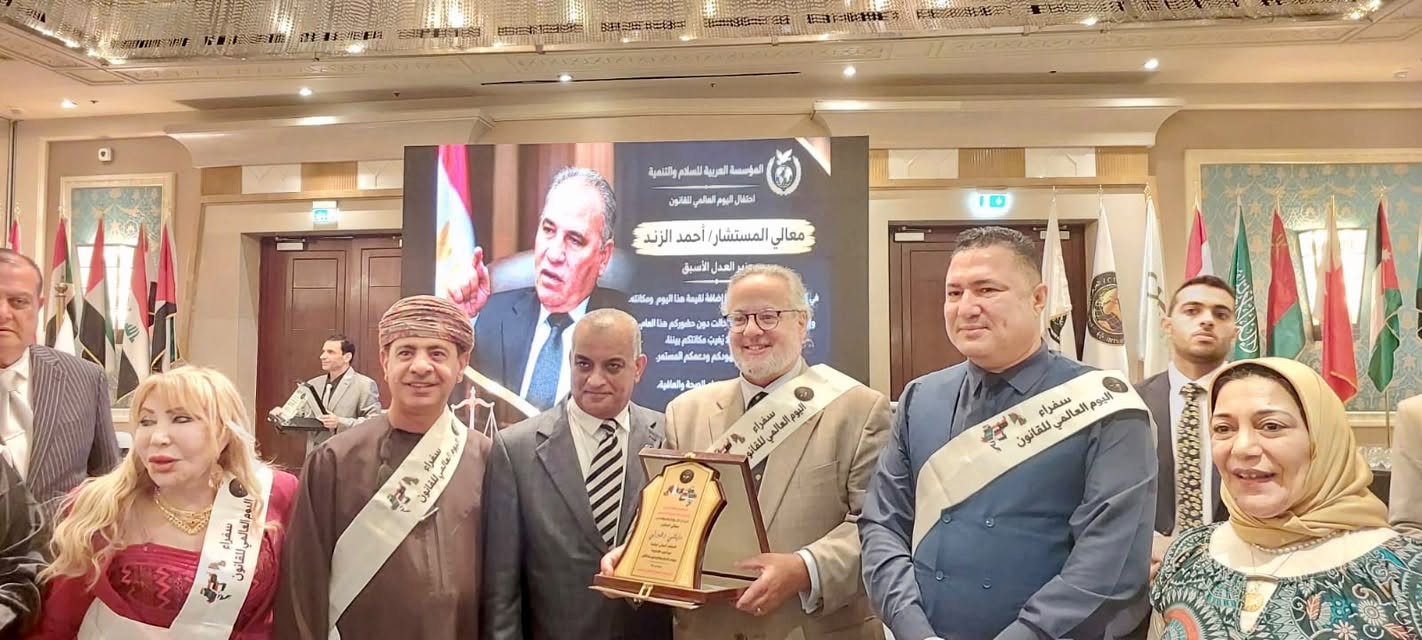
With the assistance of allied professional bodies like the Kemmet Centre for Arbitration, the Arab Court of Arbitration and with input from the academics the likes of Professor Mohamed Sameh Amr, Dean of the Cairo University Faculty of Law, the legal, technical and systems elements necessary for establishing Cairo as a dynamic centre for international arbitration are abundant. Its immediate functionality and alacrity as remaining on the forefront of international arbitration practice, Cairo’s regional emergence as a destination of commercial arbitration and dispute resolution is not firmly established.
These developments are paramount to the durable sustainability of Cairo’s position as a dominant player of preference in international arbitrations. Parties increasingly evaluate arbitral institutions according to their capacity to manage complex disputes efficiently, transparently, and predictably. Modernisation across the arbitration sector in Egypt therefore represents more than an administrative accommodation to emerging needs―it stands at the core of a broader effort to strengthen Egypt’s international standing.
The attractiveness of an arbitral centre serving as a regional, if not international hub, is highly dependent on two factors―the institution administering proceedings and the competent and reliable legal environment in which arbitration operates.
Egypt’s principal arbitration legislation, Law No. 27 of 1994, provides an exemplary statutory foundation for arbitration. Thanks to the broad input from practitioners, academics, business, and allied partners this legislation has emerged as regional model of preference. Highly influenced by the UNCITRAL Model Law, Egypt’s arbitration legal framework reflects internationally recognised principles. This includes the treatment of arbitration agreements, tribunal jurisdiction and the critical relationship between arbitral proceedings and national courts.
Egypt’s participation in the 1958 New York Convention is equally significant. The Convention provided for an international framework for recognition and enforcement of foreign arbitral awards, subject to its applicable requirements and grounds for refusal. For international investors, the prospect of enforcing an award beyond the jurisdiction in which it was rendered, is fundamental to the commercial value of arbitration. Surprisingly, it has taken almost 70-years for the preferential shift to arbitration to be realised.
Parties and investors need not, however, rely upon the robust legislative compatibility Egypt has created, despite the international confidence it offers. Businesses must also have resolved that domestic courts will respect arbitration agreements, refrain from unnecessary interference in arbitral proceedings and apply international enforcement obligations consistently.
The emergence of Cairo as an arbitral centre is no random occurrence. Egypt’s long nourished ambition to emerge as an international arbitration centre of excellence was met by its meticulous focus on legal and judicial development. Initiatives to enhance judicial competence have for many years been at the heart of Cairo’s ambitions. Significant investment in judicial education, careful selection and screening of judicial appointees with a focus on knowledge, ethics, impartiality and fairness, engaging specialist expertise and engagement with international arbitration standards has matched Egypt’s commitment to the rule of law, principles of arbitration and compliance with international standards and best practice. A continuing appetite for legislative reform and development ensures the durability of the systems that have positioned Cairo as a preferable environment for international arbitration.
Judicial standards, education, training, legislative solutions, and systems engineering are all vital and have proved critical to the practice of international arbitration in Egypt. However, the strength of it all rests in the collective ecosystem Egypt has constructed and embraced thereby driving international arbitration excellence to the fore throughout the region and internationally.
The extent to which cases can be successfully managed at-scale from lodging a claim through to final award remains complex. Cairo possesses considerable advantages in this respect. Its universities, established legal profession, practices, educated and reliable judiciary complimented by a growing community of internationally experienced practitioners provides a solid foundation upon which Egypt’s sophisticated arbitration sector has not only proven viable but thrives.
The increasing international visibility of Egyptian arbitration specialists remains a critical component of a healthy international arbitration ecosystem. Lawyers who understand Egyptian commercial law while also possessing experience of international arbitration can bridge the gap between regional business requirements and international legal expectations.
Language is another significant advantage. Arabic remains the essential lingua franca essential to commerce and government throughout much of the Middle East and North Africa. While English and French continue to be important languages for international business and legal practice it is the universality of Arabic that spans the region and its myriad commercial cultures. Cairo’s capacity to accommodate these linguistic traditions offers a practical advantage when administering disputes involving parties from different legal and cultural backgrounds.
Egypt’s development in depth over the past 25-years has also been accompanied by the development of specialist expertise in construction, energy, infrastructure, maritime commerce, and investment arbitration. These all remain commercial sectors in which disputes are by their nature frequent, generally of high monetary and operational value, invariably are technically complex and without exception, international in character.
Consequently, these sectors will undoubtedly drive the expansion of international arbitration, further enhancing Cairo’s competitive position in international arbitration.
Egypt’s ambitions must nevertheless be considered against substantial international competition.
Dubai has invested heavily in developing its arbitration infrastructure. Neither Singapore nor Hong Kong are likely to forfeit their stake so easily as major centres for international commercial disputes. London and Paris remain resolution to maintain the benefit of their historic position imbued with deep and experienced professional networks, longstanding institutional reputations, and extensive judicial expertise.
Cairo cannot expect to displace these centres simply by virtue of its geographical position or historical importance. Its long-term success will depend upon demonstrating consistent institutional independence, procedural efficiency, judicial reliability, and professional excellence.
The perception of neutrality is particularly important. International parties must be satisfied that neither nationality nor commercial or political influence will affect the administration or determination of their disputes. This requires transparent appointment procedures, effective conflict-of-interest safeguards, and confidence in the independence of arbitrators.
Equally, the practical administration of arbitration must remain competitive. Hearing facilities, digital case management, reasonable costs, access to international counsel and predictable procedural timetables all contribute to Egypt’s jurisdictional appeal.
Cairo’s challenge is therefore to translate its institutional and geographical advantages into an internationally recognised reputation for dependable dispute resolution.
The significance of Cairo’s development as an arbitral centre extends beyond widening the field of venues for international arbitration. What Egypt offers is unique―the prospect of giving the wider Afro-Arab commercial world a stronger voice in the institutions and practices that shape international dispute resolution especially in commerce increasingly conducted on its doorstep.