


by Miceál O’Hurley

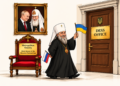
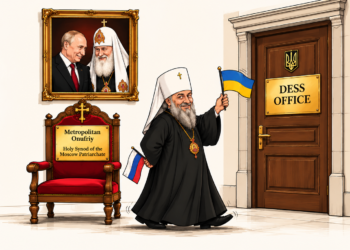
DUBLIN — Last week’s attack by the Russian Foreign Intelligence Service (SVR) upon His All-Holiness Ecumenical Patriarch Bartholomew was not merely an ad hominin attack upon the man, though calling him the “anti-Christ” was exactly that. The SVR’s invective was just the latest in the ongoing assault upon the majesty and integrity of the Ecumenical Patriarchate. By attempting to undermine the Ecumenical Patriarchate, universally recognised by Orthodox Christians since the Second Ecumenical Council (Constantinople, 381 at Canon 3) and refined and reconfirmed by the The Fourth Ecumenical Council (Chalcedon, 451 at Canon 28), as well as by The Quinisext Council (Council in Trullo, 692 – this council reaffirmed Canon 28 of Chalcedon and the 3rd Canon of 381, solidifying the equal status of Constantinople to Rome in terms of honor), Russia and the Russian Orthodox Church hopes to elevate the Moscow Patriarchate to the be the recognised centre of Orthodox Christian life. Russia has long promoted the idea that with Rome having fallen to barbarians, and Constantinople to Ottoman Turks, Moscow reigns as the “Third Rome” and legitimate leader of worldwide Christianity.
With tensions rising within global Orthodox Christianity a Pan-Orthodox Council, called the Holy and Great Council in 2016, was convened to resolve matters. The Russian Orthodox Church and its allies declined to attend in order to undermine its legitimacy. Since Russia’s break from the Ecumenical Patriarchate in 2016, Russian outlets and actors, including the Moscow Patriarchate himself, have increasingly engaged in bellicose language directed at the Ecumenical Patriarch and the Great Church. The latest invective, this time not from the Church but from the SVR, demonstrates Russia’s willingness to further fracture Christian unity by deploying its hybrid warfare machine as part of its self-declared Holy War to induce a Russkiy Mir (Russian World).
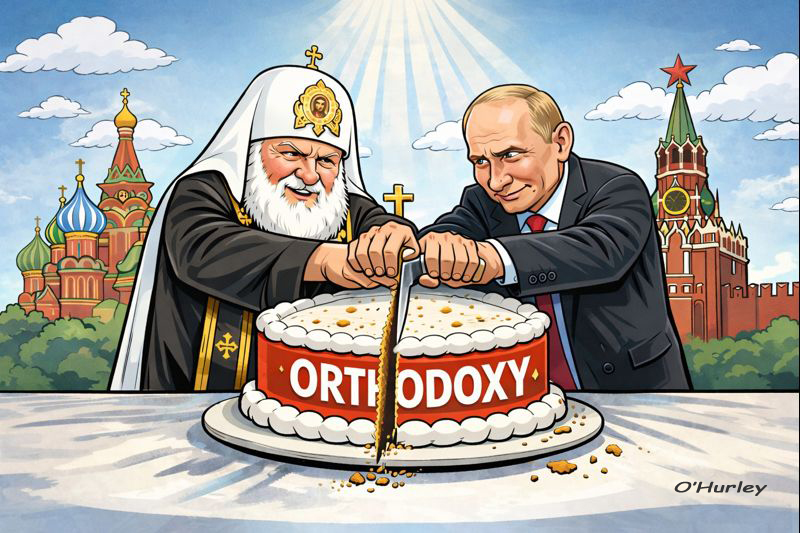
The Russian State’s foreign security service’s goal is not merely to abuse the Ecumenical Patriarchate. It seeks to lead Orthodox Christians that once fell under Russian suzerainty and the growing Orthodox Church in North America and Africa to embrace the Moscow Patriarchate at the expense of Constantinople’s traditional role as the traditional and visible centre of Christian Orthodoxy. This is a predicate act to make way for what they hope will be the emergent primacy of the Moscow Patriarchate which is part and parcel of its grand design for a renewed Russian empire. This is not being done for reasons of ecclesiology, theology or the ethos of tradition so valued within Orthodox Christianity but for the promotion of the Russkiy Mir – a state, political goal. The reasoning behind these attacks on the Ecumenical Patriarch and Constantinople are not even overtly rooted in the Gospel, tradition, theology or scripture but as Moscow Patriarch Kirill claims is fidelity to the Russian state and Vladimir Putin.
Patriarch Kirill’s declaration that Russia is the “spiritual opponent” to Western civilization is chilling. In his 8 January interview with TASS, the Moscow Patriarch declared a Russian’s failure to comply with Russia’s proposed solutions rendered one, “a traitor to the motherland”. Patriarch Kirill opined the absence of the concept of “heroism” in Western society marks its decadence and spiritual emptiness. According to him, “A hero’s act is done for something greater than oneself.” While seemingly consistent with the Church’s value of martyrs who sacrificed for the faith, Vladimir Putin’s Christmas message likened Russian soldiers to Christ, proclaiming their assault on Ukraine as “sacred”. In context, Patriarch Kirill is not preaching the Gospel message of Jesus Christ but rather proclaiming the political manifesto of Vladimir Putin. The very Orthodox unity prayed for by Jesus Christ, sometimes referred to as the “High Priestly Prayer” in the Gospel of John (17:20-23), has been subordinated to the Russkiy Mir ideology by Patriarch Kirill and the Russian Orthodox Church at the expense of Christianity.
Orthodox Christianity and onlookers in the West should not be swayed by Russia’s polemic attack in calling the Ecumenical Patriarch “the anti-Christ in a cassock”. The SVR has no canonical standing let alone religious or spiritual authority. Their attack upon the Ecumenical Patriarch and Constantinople must be viewed in its political context. Beyond Patriarch Kirill proclaiming Russia’s war on Ukraine a “Holy War” the Russian State has now defined respect and allegiance given to the Ecumenical Patriarch and Constantinople as heresy. The SVR are, in effect, declaring war on anyone who abides the Canons of the Orthodox Councils that recognise the role of the Ecumenical Patriarch as invalid and opposition to “Russia’s proposed solutions“, as reaffirmed by Patriarch Kirill in his 8 January 2026 interview with TASS as “traitorous“.
Russia’s and the Moscow Patriarch’s goals are now undeniably one — to groom Orthodox Christians throughout the world to break with the Ecumenical Patriarch and Constantinople. This is not mere hyperbole but the only reasonable response by whom Russia sees as a genuine Orthodox Christian concerning the Ecumenical Patriarch and Constantinople. Russia believes division within Orthodox Christianity will not only assist in their realisation of Moscow being seen as the legitimate centre of Christianity as the “Third Rome” but will assist in sewing dissention amongst Orthodox Christians living in countries whose local Churches are in communion with Constantinople.
By realigning Orthodox Christians’ allegiances to the Ecumenical Patriarchate and their Western-aligned governments that oppose Russian aggression Russia hopes to benefit. By forcing Orthodox Christians to choose between East and West, Moscow and Constantinople the Russian state and Moscow Patriarchate seek to realign the “near abroad” to rely on isolate themselves from reliable, responsible news sources in the West and from Constantinople and be more uniformly reliant on Russian messaging. While those affiliated with Russia as part of the “near abroad” have for years been subjected to politicisation that strikes at the West’s valued social cohesion by now forcing Orthodox Christians to choose between serving the “anti-Christ” or Patriarch Kirill they hope to diminish their audience’s willingness to access and otherwise believe or rely in Western news and information. This consolidation of political and religious ideologies which demand individuals declare themselves adherents to the “Satanic West” and “anti-Christ” or Vladimir Putin who promotes himself as the “defender of traditional values” and Patriarch Kirill who declares to be the keeper of Orthodoxy are meant to have a deleterious impact on satisfaction life in the West now seeks to finally mobilise all Russian Orthodox faithful and their allies firmly behind Moscow in opposition to the West, including the Ecumenical Patriarchate.
The Russian Orthodox Church’s abandonment of Gospels and Christ in favour of their Holy Rus’ ideology subverts the Kingdom of God to the Russkiy Mir. This agenda replaces Christ with Putin and the Ecumenical Patriarchate with the Moscow Patriarchate as the authentic centre of Christian life. A review of His All-Holiness’ and the Ecumenical Patriarchate’s Christmas message of peace, good will and the resurrection stands in stark contrast to the annual Nativity sermon of Moscow Patriarch Kirill which focused on the Russkiy Mir, loyalty to the motherland and embracing Russia’s declaration of a “Holy War” against Ukraine and the “Satanic West” with scant reference to Christ.
The absurdity of this movement’s latest disinformation masterstroke, claiming Constantinople plans to grant autocephaly to a “false church” in Montenegro, indicates this is only the beginning. Claiming the appearance of one of this church’s clergy in a photo with a Metropolitan aligned with the Ecumenical Patriarchate is evidence of negotiations to recognise this Montenegrin church is based on no proof but outlandish speculation. It also indicates efforts to undermine the Ecumenical Patriarch and Constantinople will not dissipate any time soon. The seeming willingness of the Russian Orthodox Church to cooperate in Russia’s quest to reestablish their imperial suzerainty over millions of free people who enjoy the leadership of their local Churches in communion with the Ecumenical Patriarch is outrageous. That it is succeeding in some quarters to cause a rupture is disconcerting.
Buttressed by a burgeoning Russian Orthodox disinformation sphere created to bolster the hybridisation of Russia’s political-Orthodox messaging the challenge and damage is likely to continue. Outlets such as the Union of Orthodox Journalists (UOJ) and web sites promoting Russia overtly-masculine “Ortho-Bros” version of “Orthodoxy” promoted by Moscow, often administered by Orthodox neophytes who are seemingly incapable of differentiating between Russian neo-imperialist thought and Orthodox theology, give evidence to Moscow’s intent to win over the minds of Orthodox Christians and those with anti-Western political leanings. The question remains for Orthodox faithful – will their hearts follow and genuine Orthodox Christianity survive, let alone prevail against this onslaught against Orthodoxy, democracy, humanity and security?
________________________________________
Along with his co-author, Oksana Shadrina, Miceál O’Hurley is the author of the newly released, Wolves in Sheep’s Clothing: The Russian Orthodox Church’s Threat to European Security and Democracy (Ibidem/Columbia University Press – 2025).